Star Roam Sky Map Planet
- 4.3
- Rating
- 1.00M
- Installs
- Free
- Price
 Analysis by App-foxy
Star Roam Sky Map Planet is the kind of education app that can turn an ordinary evening into a small astronomy lesson. I found its appeal easy to understand: instead of beginning with dense explanations, it invites you to look upward and become curious about the sky. That makes it especially suitable for families, casual learners, and anyone who wants a gentler introduction to stars and planets than a textbook usually provides.
What matters, though, is whether that first sense of wonder survives after the novelty wears off. My experience is that the app works best when it becomes part of a real activity rather than something opened once, explored for a few minutes, and forgotten. It is free to start, aimed at Everyone, and developed by Findout World Inc. Its education focus is clear, but its lasting value depends heavily on how deliberately you use it.
Why the first week feels so inviting
The strongest part of the early experience is the low barrier to entry. You do not need to know constellation names, understand orbital mechanics, or prepare a lesson before opening it. The idea of exploring the starry sky through a phone feels approachable, particularly for children who respond better to visual discovery than to memorizing lists.
You May Also Like

 Blood Strike: 2.5 Anniversary
Blood Strike’s Loadouts Turn Every Drop Into a Tactical Gamble
A close look at Blood Strike’s custom loadouts: how fast access to signature weapons reshapes its battle royale rhythm, rewards preparation, and narrows the gap between fights.

 Pandora - Music & Podcasts
Pandora’s Music Is Easy to Start, but Harder to Recover
Pandora’s strength is its low-effort path from a seed to a station. Its weak spot is how much confidence it asks you to place in connection, setup, and quiet recovery.

 8 Ball Pool
 Is Built on Rivalries, Rematches, and Routine
A close look at the rivalries, rematches, shared routines, and unanswered safety questions that turn a quick pool match into a persistent mobile community.

 Samsung Music
’s Quiet Strength Is Playing What You Already Own
Its reach comes less from spectacle than from dependable access to a personal library. That simplicity is both the app’s strongest retention engine and its ceiling.

 AccuWeather: Weather Radar
AccuWeather Review: A Quick, Clear Forecast for Everyday Decisions
For everyday plans, the best forecast is the one you can understand quickly. AccuWeather makes rain timing, radar, and local conditions easy to act on, with a few trade-offs.

 Hill Climb Racing
Why Hill Climb Racing Still Turns Crashes Into One More Run
A tiny car, a bumpy hill and one more upgrade: Hill Climb Racing keeps resurfacing because its simple chaos makes every near-miss feel personal.
More From Our News Desk



I would introduce it to a child by giving them a simple mission rather than asking them to “learn astronomy.” For example, we might look for something bright, compare what appears in different parts of the sky, and then talk about why some objects are easier to notice than others. That small change in framing makes the app feel like a shared investigation instead of another educational assignment.
The app is also useful with friends or siblings because it gives everyone a common point of attention. One person can hold the device while another asks questions, guesses what might appear next, or connects the digital view with what is visible outdoors. In that setting, the phone is not replacing the sky; it is helping people notice it.
Its average rating of 4.5 from around 15 thousand ratings suggests that many users find this accessible approach worthwhile. I would not treat that number as a guarantee that every learner will enjoy it, but it does fit my impression of the product: the concept is immediately understandable, and the experience does not demand specialist knowledge before it becomes interesting.
A practical evening routine
A realistic use case is a short family routine after dinner. Rather than letting a child scroll through the app without direction, I would spend ten minutes choosing one question: What can we identify tonight? What changes when we move the phone? Which object looks most interesting? Afterward, I would step outside if conditions allow and compare the digital representation with the actual sky.
This approach reveals one of the app’s less obvious strengths. It can act as a bridge between screen time and observation, but only if the user deliberately closes the gap. Used indoors as a purely visual toy, it may provide a pleasant moment. Used alongside a window, balcony, garden, or school activity, it has a better chance of creating a memory and encouraging follow-up questions.
For adults, the first week can be enjoyable for a different reason. I like educational tools that let me learn alongside a child without making me pretend to be an expert. Star Roam Sky Map Planet gives a conversation somewhere to begin. That is more valuable than an impressive collection of facts that nobody remembers the next day.
What to expect from the app’s role
I would not approach it as a complete astronomy course. Its main role is orientation and curiosity: helping a beginner engage with the sky and giving a family a shared way to explore it. Someone looking for detailed scientific instruction, structured examinations, or a deep reference library may eventually need a more specialized resource.
That distinction is important when deciding whether to install it. The app’s charm comes from making space feel friendly. If you want a rigorous curriculum with progress tracking and formal assessments, another education product may suit you better. If you want a visual starting point that can make a child ask, “What is that?” then this is a much more natural fit.
What remains useful after the novelty fades
The month-to-month question is harder. A sky map can be exciting during the first few sessions because every interaction feels new. Later, the app needs a reason to return. In my view, that reason comes less from endlessly browsing and more from tying use to changing circumstances: a clear night, a school topic, a family trip, or a child’s new question.
That makes the app a good companion for occasional learning rather than a daily habit for everyone. I would keep it installed on a family device and bring it out when interest naturally appears. I would not expect a child to open it every day without encouragement, because astronomy is not always the immediate priority when other apps offer faster entertainment.
Its reported reach of over one million installs gives it the scale of a well-established casual learning app, but popularity does not remove the need for a personal routine. The most effective long-term users will probably be those who connect it to events and conversations instead of treating it as a standalone destination.
Three ways to create recurring value
First, use it as a question log. Each time a child asks something about the sky, open the app with that question in mind and try to connect the answer to what you can observe. The important part is not merely finding an object; it is remembering the question that led you there. This gives repeated sessions a purpose and prevents random tapping from becoming the whole experience.
Second, make comparisons over time. Return to the same viewing spot on different evenings and discuss what seems different. Even when the app itself has not changed, the user’s understanding can develop. This is a simple way to turn a one-off demonstration into a small observation project, especially for children who enjoy noticing patterns.
Third, use it before a real-world activity, not after it. A quick session before camping, a science lesson, or a late walk can prime attention. Once outside, ask the learner to identify something without immediately handing over the phone. That creates a useful trade-off: the app provides confidence and context, while the real sky still requires patience.
These workflows are more valuable than simply reopening the app whenever someone feels bored. They also show where the product’s recurring usefulness comes from. It is not necessarily a replacement for a full astronomy reference; it is a tool for making observation easier to start and easier to discuss.
Where it fits beside familiar alternatives
Compared with a printed star chart, the app is more convenient for spontaneous exploration and more inviting for children who may not know how to read a traditional chart. A book, however, can be calmer, easier to share around a table, and better for sustained reading without a glowing screen. I would use the app to begin a topic and a book to deepen it.
Compared with a general web search, Star Roam Sky Map Planet offers a more focused experience. Searching the web can answer a precise question quickly, but it can also lead to unrelated pages, advertisements, or explanations that are too advanced for a young learner. The app’s value is the guided feeling of looking at the sky rather than assembling an activity from scattered results.
Compared with a serious astronomy application, it is likely to appeal more to beginners and families than to experienced observers. A specialist may want richer technical detail, more control, or a reference experience designed around precision. I would choose the specialist option for planned observation sessions and keep this app for introductions, casual discovery, and shared learning.
Maintenance, friction, and reasons you may stop opening it
The maintenance burden is not mainly technical; it is motivational. An app like this needs a reason to return, and that reason often has to come from the parent, teacher, or curious friend who introduces it. If nobody supplies a question or activity, the initial excitement can flatten into passive browsing.
That is the first genuine limitation I noticed in judging its long-term place. Educational apps can be enjoyable without becoming habits. The fact that it is free makes trying it easy, but free access does not automatically produce a sustained learning routine. I would set a modest expectation: short, purposeful sessions are more realistic than demanding daily use.
There is also a possible attention problem. Children may focus on moving around the digital sky while missing the slower skill of looking carefully at the real one. I would solve that by using a “phone down” rule after each discovery. Ask the child to describe what they think they saw, then look outside if possible. This keeps the app from becoming the final destination.
Another source of fatigue is repetition. If every session follows the same pattern of opening the map, pointing at objects, and closing it, the experience may start to feel predictable. Changing the task helps: one day identify something, another day compare locations, and another day explain a discovery to someone else. The app itself does not have to provide a new gimmick each time if the user changes the learning goal.
Families should also be aware that the free label does not mean every possible part of the experience is necessarily without cost. In-app purchases are listed from $0.99 to $69.99 per item. I would check the purchase settings before handing the device to a child, particularly if the app is being used independently. That is a practical precaution, not a criticism of the educational idea, but it matters when choosing an app for family use.
The current version is 1.4.5, and it runs on operating systems from version 10 onward. That makes the compatibility requirement worth checking before installation on an older phone or tablet. For most recent devices this should be straightforward, but families often keep an older tablet for children, so confirming the operating system can prevent an avoidable disappointment.
Who should make room for it
I would recommend it to parents who want a screen activity that can lead into conversation, teachers looking for an approachable astronomy prompt, and beginners who feel intimidated by technical star charts. It is also a good choice for a child who repeatedly asks about the Moon, planets, or bright points in the night sky and needs a visual way to organize that curiosity.
The app is less suitable for someone who wants a complete course with formal milestones, detailed testing, or a strong long-term progression system. It may also disappoint users who expect every session to feel as fresh as the first. If your main goal is advanced observation or serious astronomical study, a dedicated reference tool and a physical chart may offer more depth.
Age suitability is broad because the content is rated Everyone, but that does not mean every child will use it independently in the same way. Younger learners may benefit from an adult explaining what they are seeing, while older learners may quickly want more detailed answers. I see the best results when the app is treated as a shared starting point rather than an automatic teacher.
How to decide whether it will last on your device
Before installing, ask yourself what will bring you back next month. If the answer is a real plan—weekly sky watching, a classroom topic, a family science evening, or a child’s ongoing interest—then the app has a reasonable chance of earning permanent space. If the plan is only to browse it once, the first-week appeal may be the entire experience.
I would also decide where it belongs in your routine. Keeping it available on a shared tablet can make spontaneous family use easier, while placing it among other learning tools can remind children that it is for exploration rather than endless entertainment. A short session with a clear question is usually better than leaving the app open with no destination.
The developer, Findout World Inc, has positioned the product as an accessible learning experience rather than a specialist instrument. That is exactly how I would judge it. Its success is not measured by how much technical information a user can recite after one sitting, but by whether the user becomes more willing to look up, ask questions, and continue learning elsewhere.
My long-term verdict
After looking beyond the initial novelty, I think Star Roam Sky Map Planet earns a place as a lightweight astronomy companion, especially in homes where an adult is willing to turn it into an activity. Its strongest quality is not that it makes every learner an expert. It makes the first step feel easy, and that first step can be surprisingly important for a child who has never known where to begin.
I appreciate that it is free to download and available to a broad audience, while the Everyone rating makes its intended reach clear. The presence of optional purchases means I would manage access carefully, but the basic appeal remains easy to understand: open it when curiosity appears, explore together, and then connect the digital view with the world outside the screen.
My honest recommendation is conditional but positive. It is worth keeping when you use it as a prompt for real observation, not as a substitute for it. Families who build small routines around questions and outdoor viewing can get repeated value from the app. Users seeking advanced astronomy, formal study, or endless fresh content should look elsewhere or pair it with more specialized resources.
For me, that balance is enough to make it useful beyond the first week. It may not become a daily habit, and it does require a little effort from the person introducing it, but its ability to make the night sky feel approachable gives it a meaningful role in casual education. I would recommend trying it with one specific question, one short session, and one follow-up look at the real sky. If that simple pattern sparks more questions, the app has already done its job.
FAQs for Star Roam Sky Map Planet
01What is Star Roam Sky Map Planet and how does it work?
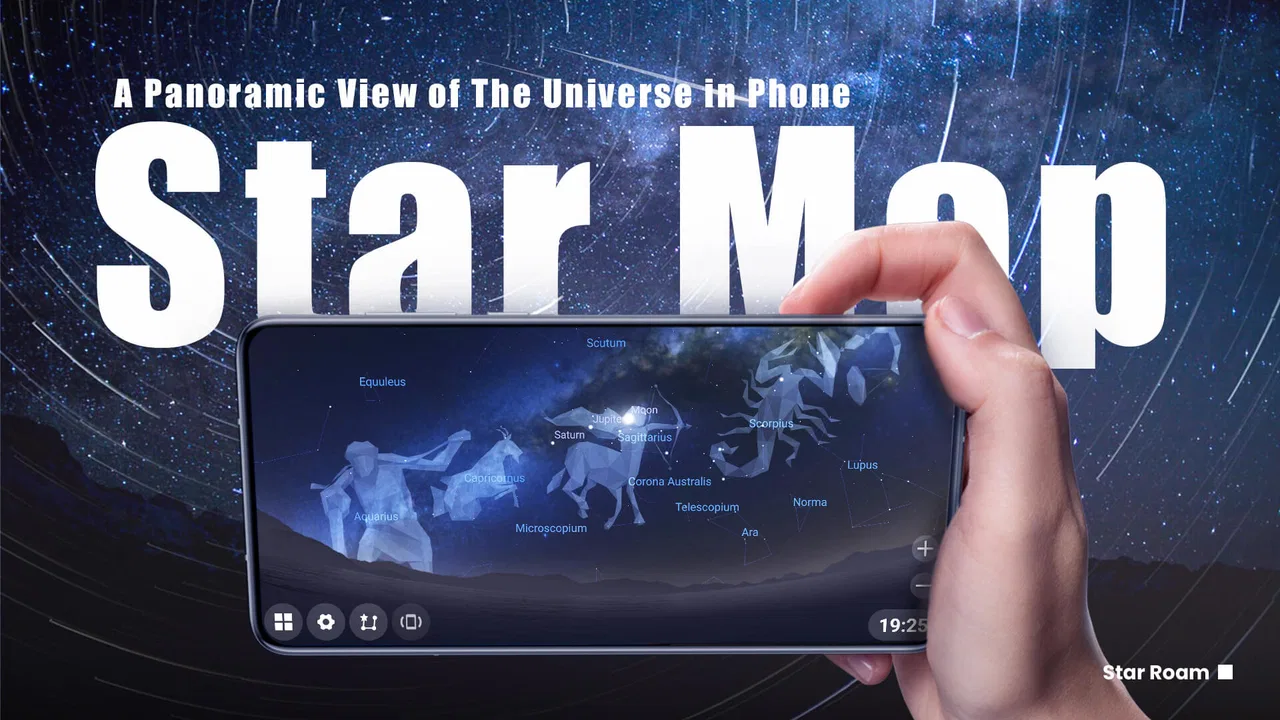
Star Roam Sky Map Planet is an interactive stargazing app designed for both amateur astronomers and curious stargazers. It utilizes your device's GPS and sensors to identify stars, planets, and constellations in real-time. By pointing your device at the sky, the app displays detailed information about celestial objects, making stargazing both educational and engaging.
02Is Star Roam Sky Map Planet available for both Android and iOS devices?
Yes, Star Roam Sky Map Planet is available for download on both Android and iOS platforms. You can find it on the Google Play Store for Android devices and the Apple App Store for iOS devices. Ensure your device meets the app’s system requirements for optimal performance and features.
03What features does Star Roam Sky Map Planet offer?
The app offers a range of features including real-time sky tracking, a comprehensive database of celestial objects, augmented reality overlays, and detailed information on stars, planets, and constellations. It also includes sky event notifications and customizable settings to enhance your stargazing experience.
04Does Star Roam Sky Map Planet require an internet connection to function?
Star Roam Sky Map Planet primarily uses your device’s GPS, gyroscope, and compass, so it can function offline once downloaded. However, an internet connection may be necessary for initial setup, downloading additional data, or accessing updated information on celestial events.
05Is there a cost associated with downloading or using Star Roam Sky Map Planet?
Star Roam Sky Map Planet is typically available as a free download, but it may offer in-app purchases or a premium version with additional features. These might include advanced tracking options, ad-free use, or exclusive content. Check the app store listing for detailed pricing information.
Pros
- Highly accurate celestial mapping.
- User-friendly interface for beginners.
- Offline mode available for remote areas.
- Regular updates with new features.
- Customizable viewing settings.
Cons
- In-app purchases required for full features.
- Battery drain is noticeable during use.
- Occasional GPS inaccuracies reported.
- Ads can be intrusive for free users.
- Limited support for older devices.

Star Roam Sky Map Planet
Gallery